Short answer: Coconut shell charcoal briquettes generally burn with lower ash and a more uniform shape than hardwood lump, while a coconut and hardwood blend trades some of that performance for a lower cost per kilogram.
Barbecue buyers in retail and foodservice usually choose between three options: pure coconut shell briquettes, hardwood charcoal, or a blend of the two. Each fits a different price point and use.
Why coconut shell charcoal
Coconut shell is a by-product of the coconut industry. Carbonised and pressed into briquettes, it gives:
- A uniform shape and size, so every bag performs the same way.
- Relatively low ash compared with many hardwood products, which means less cleaning between cooks.
- High fixed carbon, which supports long, steady heat for grilling.
Where hardwood fits
Hardwood charcoal is widely available and lights quickly. In a blend, it lowers the cost per kilogram while coconut shell keeps the briquette dense and consistent.
Aero Charcoal barbecue grades
| BBQ Pure | BBQ Blend | |
|---|---|---|
| Feedstock | Coconut shell | Coconut + hardwood |
| Ash, dry basis | Max. 4.0% | Max. 8.0% |
| Moisture, as received | Max. 6.0% | Max. 8.0% |
| Fixed carbon, dry basis | Min. 75% | Min. 70% |
| Volatile matter, dry basis | Max. 20% | Max. 22% |
| Gross calorific value, dry basis | ≥ 7,000 kcal/kg | ≥ 6,500 kcal/kg |
| Shapes | Pillow / hollow hexagon | Pillow / hollow hexagon |
| Pack sizes | 3 / 5 / 10 kg | 5 / 10 / 20 kg |
Pillow or hollow hexagon?
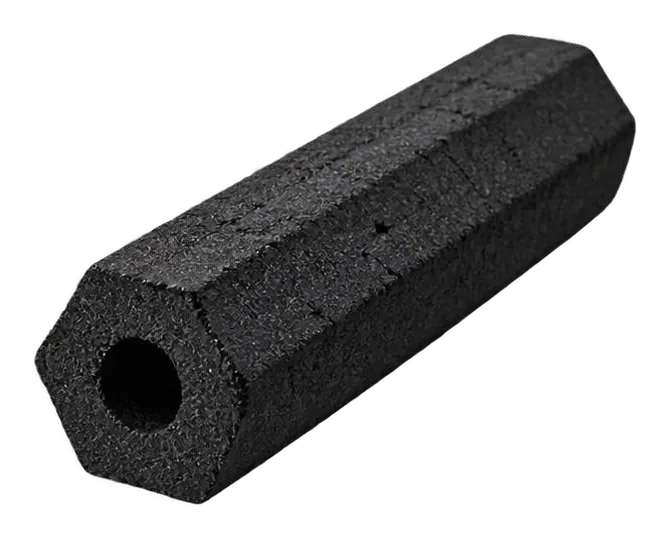
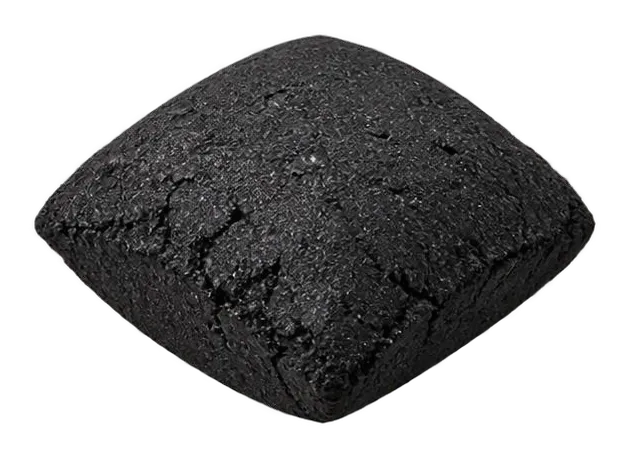
Pillow briquettes are compact and easy to pour, a familiar format for retail bags. Hollow hexagon briquettes have a hole through the centre that improves airflow and helps ignition, and they stack neatly for long cooks. See all formats on Form & size.
Which one to choose
Choose BBQ Pure for higher-end retail ranges and professional grills where low ash and consistency matter. Choose BBQ Blend for foodservice and value ranges where cost per kilogram is the main driver.