Short answer: Restaurants and caterers usually choose barbecue charcoal on burn time, ash, smoke and cost per hour of cooking. Pure coconut shell briquettes favour consistency and low ash, while a coconut and hardwood blend favours cost per kilogram.
A restaurant does not buy charcoal the way a backyard cook does. The question is not the price of a bag. It is how many hours of steady cooking that bag delivers, and how much cleaning follows.
What foodservice buyers care about
- Burn time and steadiness. Long, even heat means fewer refuels during service.
- Ash. Less ash means less cleaning between services and less disruption on the grill.
- Smoke and odour. Neutral combustion matters where food is cooked close to the fire.
- Consistent size. Uniform briquettes light and burn the same way from bag to bag.
- Pack size. Large packs reduce handling for high-volume kitchens.
Two options
BBQ Pure is a coconut shell briquette with a maximum of 4.0% ash. It suits professional grills and premium retail where consistency and low ash matter.
BBQ Blend is a coconut and hardwood briquette with a maximum of 8.0% ash. It suits foodservice and value ranges where cost per kilogram is the main driver.
The full figures for both are in our barbecue grade comparison.
Pillow or hollow hexagon
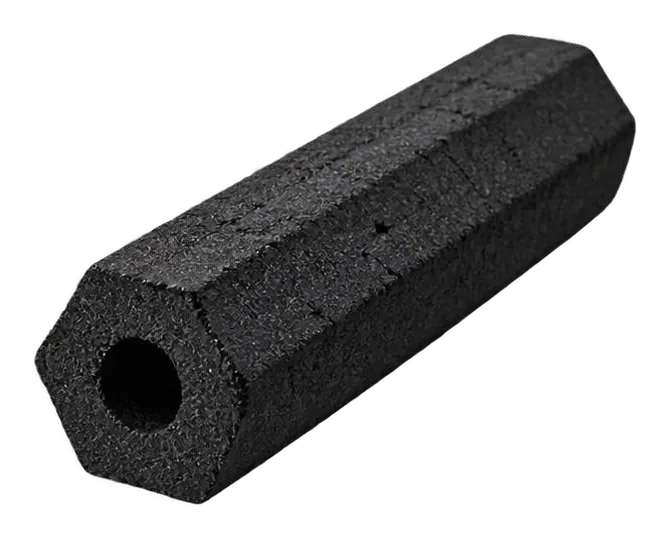
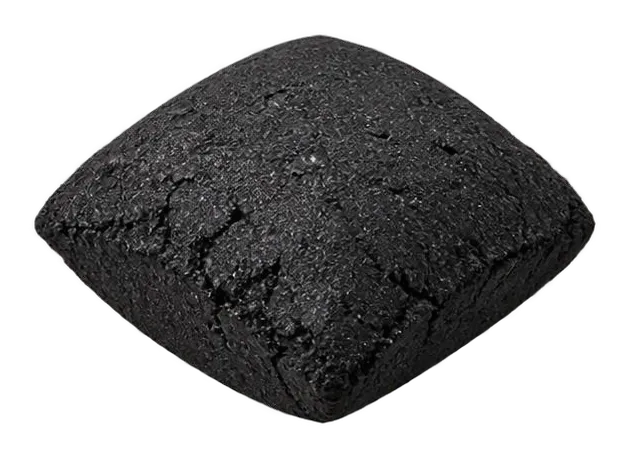
Pillow briquettes are compact and easy to pour. Hollow hexagon briquettes have a hole through the centre that improves airflow and helps ignition, and they stack neatly for long cooks. Both are available for both grades. See Form & size.
Test before you commit
Run each option on your own grill through a normal service. Note how long it takes to reach cooking temperature, how long it holds, how much ash builds up and how much you use per service. Cost per hour of cooking is the number that decides it, and only your own test gives you that number.
Pack sizes
BBQ Pure is offered in 3, 5 or 10 kg packs and BBQ Blend in 5, 10 or 20 kg packs. Under your own brand or ours, send your requirements and we will recommend a grade and pack size.