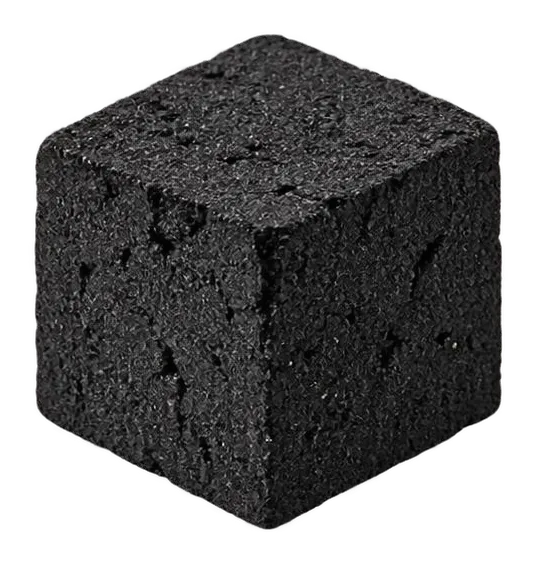
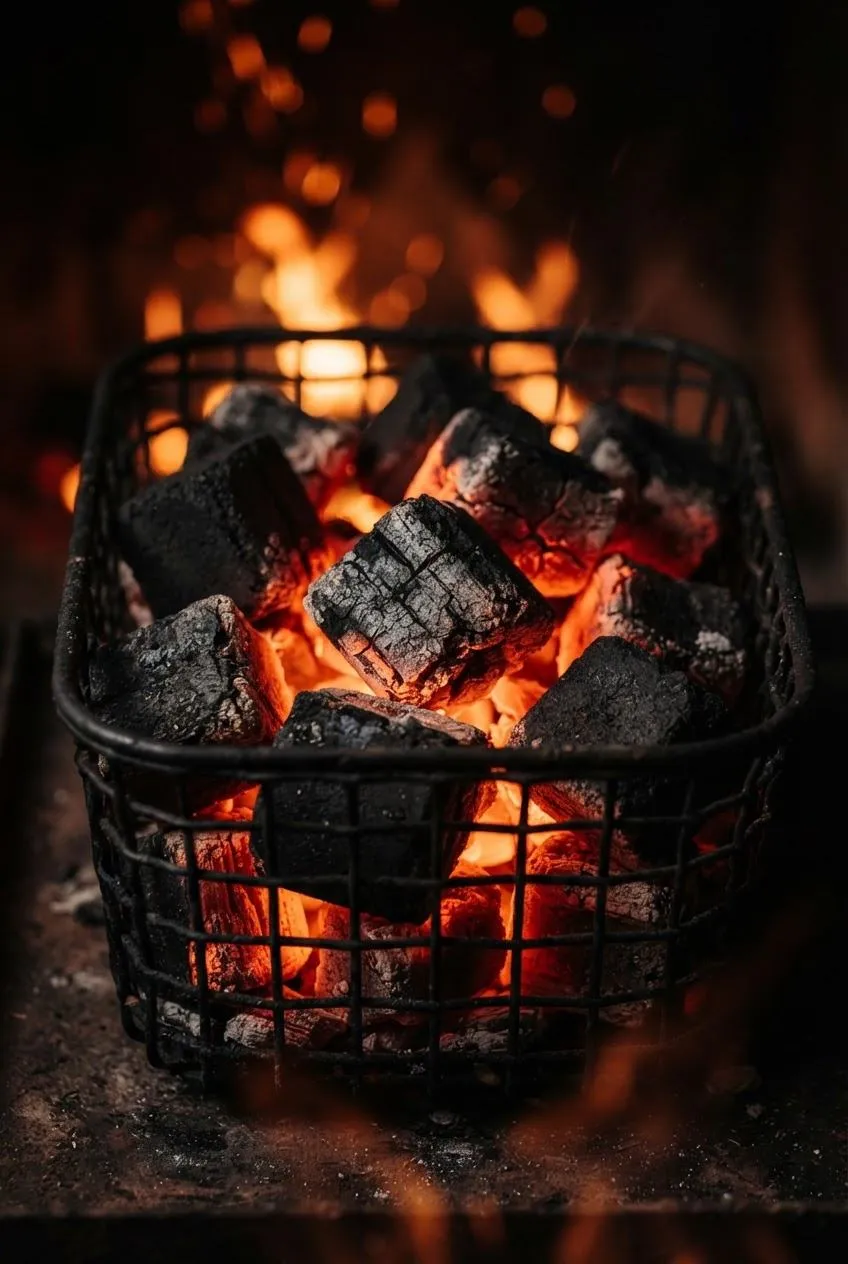
Short answer: Coconut shell charcoal is dense and burns with little ash and a neutral smell, which is why most premium shisha brands use it instead of wood-based charcoal. Wood charcoal lights faster but usually leaves more ash.
Shisha charcoal comes from a few different raw materials. The two you will see most often on a spec sheet are coconut shell and wood. They behave differently in the bowl, and the difference shows up in how customers rate a session.
How coconut shell charcoal behaves
Coconut shell is hard and dense. Once it is carbonised, ground and pressed into cubes, the result is a compact piece of charcoal with these traits:
- Low ash. Less residue on the foil and in the bowl, so the session stays cleaner for longer.
- A neutral smell. Well-made coconut charcoal adds little odour of its own, so the flavour of the tobacco comes through.
- Steady heat. High fixed carbon content supports an even burn instead of sharp peaks and drops.
- A consistent shape. Pressed cubes come out the same size from batch to batch, which makes heat management easier for the person preparing the bowl.
Where wood charcoal fits
Wood-based charcoal is easy to source and usually ignites quickly. The trade-off is that ash content tends to be higher and the quality varies more with the type of wood and how it was carbonised. Some products also rely on additives to light faster, which is worth asking about directly.
A side-by-side view
| Coconut shell | Wood | |
|---|---|---|
| Ash | Usually lower | Usually higher |
| Smell and smoke | Neutral when well made | Depends on wood and process |
| Burn behaviour | Steady, long | Faster to light, less even |
| Shape consistency | High, pressed cubes | Varies by product |
| Cost | Often higher per kilogram | Often lower per kilogram |
These are general tendencies, not guarantees. A poorly made coconut cube can still disappoint, and a good wood product can perform well. That is why the numbers on the spec sheet matter more than the raw material alone.
What to check before you buy
Ask for ash, moisture, fixed carbon, volatile matter and calorific value, and ask which basis each is reported on. Our guide on how to read shisha charcoal specifications explains each figure. Then run an application test in your own bowls, because the lab sheet does not show ignition time or how a cube holds its shape through a full session.
Aero Charcoal’s shisha cubes are made from coconut shell. See Shisha Signature for the low-ash grade and Shisha Select for the core commercial grade.