Short answer: Ash is the non-combustible residue left after charcoal burns, shown as a percentage of weight. Lower ash means less residue in the bowl, but only compare figures that use the same basis and the same test method.
Ash is usually the first number a shisha buyer looks at. It is also the number that is easiest to compare unfairly. This guide explains what it measures and how to read it.
What ash is
When charcoal burns, the carbon turns to gas and a small amount of mineral material stays behind as ash. Ash content is that leftover, expressed as a percentage of the sample weight.
Why a buyer cares:
- Less residue. Lower ash means less grey ash on the foil and in the bowl, and less to clean up.
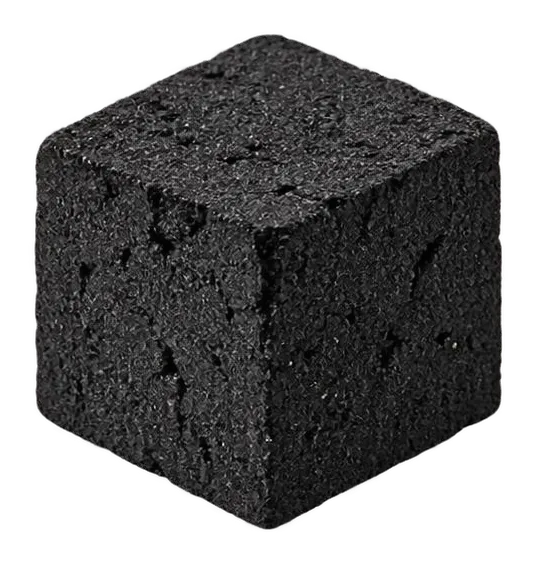
- Cleaner appearance. A cube that burns down to a thin, even ash layer looks better in a lounge than one that crumbles.
- A hint about the raw material. Clean coconut shell charcoal tends to give lower ash than charcoal made with soil, bark or mixed waste.
Check the basis
A figure such as “max. 2.5%” means little until you know the basis:
- Dry basis calculates the result as if the sample held no moisture. It lets you compare samples that arrived with different water content.
- As received reports the sample exactly as delivered, moisture included.
The same charcoal gives a slightly lower ash number as received than on a dry basis, because the water adds weight. If one supplier quotes dry basis and another as received, the two numbers are not comparable. Ask for the basis in writing.
Maximum, not typical
Specifications usually give a maximum, for example “max. 1.8%”. That is a limit the batch should stay under, not the average you will see. Ask whether the figure is verified for each batch or only measured once on a pre-production sample.
Ash is not the whole picture
A low ash number does not make a good charcoal on its own. Read it together with:
- Fixed carbon. A higher share usually means longer, steadier heat.
- Moisture. High moisture slows ignition and can make the cubes fragile.
- Gross calorific value. The total heat potential, in kcal/kg.
- Dimensions and density. These decide how the cube sits in the bowl and how long it lasts.
Our guide How to read shisha charcoal specifications covers these together.
Test it yourself
The most useful check is simple. Burn a sample of each candidate the same way, in the same bowl, and compare the ash left after the same time. A laboratory number and your own result should point the same way.
At Aero Charcoal
Shisha Signature has a maximum of 1.8% ash and Shisha Select a maximum of 2.5%, both reported on a dry basis. The published specifications are verified per batch against the agreed parameters. See the Shisha Signature and Shisha Select pages for the full tables, or request a sample to test them yourself.